Flooring sets the tone for a home. It frames every finish choice and quietly bears the brunt of daily life, from wet boots and spilled coffee to pet claws and rolling chairs. When clients ask whether to choose luxury vinyl plank or hardwood, they are usually weighing two questions: what will it cost, and how long will it last looking good? The honest answer is that both materials can perform beautifully, but they do so in different ways and at different price points. The right choice depends on how you live, where the floor sits, and what you expect from it ten or thirty years down the line.
What LVP and Hardwood Actually Are
Luxury vinyl plank, or LVP, is a layered product. At the top, a clear wear layer protects the printed design. Under that, a vinyl design film replicates wood grain, followed by a rigid or flexible core. Many modern LVP products use a rigid core, commonly SPC, a stone polymer composite, or WPC, a wood polymer composite. Boards click together with a tongue-and-groove profile, often installed as a floating floor over an underlayment.
Hardwood comes in two broad categories. Solid hardwood is milled from a single piece of wood, typically three quarters of an inch thick, and nailed to a wood subfloor. Engineered hardwood uses a veneer of real wood bonded to a stable plywood core. Engineered boards can be glued or floated, and some can be nailed. Solid offers the most potential for future sanding, while engineered excels in dimensional stability.
Clients sometimes compare LVP to laminate, which uses a paper image layer under a durable topcoat. The feel underfoot and moisture performance of LVP clearly differentiate it. LVP is fully synthetic and more water tolerant, while laminate swells if water penetrates joints.
Cost Benchmarks You Can Plan Around
Costs vary with brand, thickness, wear layer, species, and finish. That said, reliable ranges help narrow decisions.
Material cost for mid-grade LVP commonly runs 2 to 5 dollars per square foot. Add underlayment, trim, and a moisture barrier where needed, and most whole-home LVP projects land in the 4 to 7 dollars per square foot range for material.
Mid-range engineered hardwood often sits between 4 and 9 dollars per square foot for material, depending on species and veneer thickness. Solid hardwood materials range from 5 to 12 dollars per square foot for domestic species like oak and maple, and more for exotics or wide planks.
Installation drives the other half of the equation. Floating LVP installs quickly and typically runs 2 to 4 dollars per square foot for labor in straightforward spaces. Engineered hardwood varies by method: floating installs mirror LVP labor, glue-down runs higher due to adhesive cost and prep, often 3 to 6 dollars per square foot. Solid hardwood nail-down installs usually range from 4 to 8 dollars per square foot, with added costs if subfloors need leveling or if complex patterns are specified.
Finishing or refinishing adds another layer. Pre-finished hardwood includes factory-applied coatings and does not require site finishing. Site-finished floors involve sanding, staining if desired, and sealing. That multi-day process adds 3 to 6 dollars per square foot depending on stain complexity, number of coats, and local labor rates. In a recoat cycle ten to fifteen years later, expect 2 to 4 dollars per square foot if no deep sanding is required.
When we run budget exercises with homeowners remodeling kitchens, especially those reviewing The Ultimate Guide to Kitchen Remodeling Costs in Chicago for perspective, LVP often makes big footprints possible within tight budgets, while hardwood tends to become the focal splurge that drives the aesthetic. The decision hinges on the trade of upfront cost for future refinishing potential and long-term value.
Durability in Daily Life
Durability gets tossed around as a single concept, but it breaks into several buckets: surface wear, impact resistance, denting, water tolerance, and long-term maintainability.
LVP’s wear resistance depends on the thickness and chemistry of the wear layer. Good products list a wear layer of 12 to 20 mil for residential use, and 20 mil or more for homes with heavy traffic or dogs that mean business. In practice, I have seen 12 mil LVP hold up fine in a two-person condo, yet show micro-scratches after a year under a home office chair with hard casters. A simple fix prompts better performance: chair mats or soft casters. The SPC core resists indentation from heavy furniture, but small point loads like stiletto heels can mark it, especially in hot conditions where vinyl is more pliable.
Hardwood gains character over time, which some love and others fight. Species hardness matters. On the Janka scale, white oak sits around 1360, red oak around 1290, and maple around 1450. Softer species like walnut dent more easily but offer deep warmth. Surface finishes are the first line of defense. Factory-finished aluminum oxide coatings are tough, but no coating is invincible. Heavy grit under shoes can etch micro-scratches. The difference with hardwood is that many defects can be sanded away, restoring the surface rather than merely disguising it.
Water tells another story. LVP handles splashes and wet mopping without concern. Standing water, if left long enough, can infiltrate seams, but LVP is far more forgiving in kitchens, baths, laundry rooms, and basements. Hardwood needs respect around water. Occasional spills are fine if wiped promptly. Prolonged moisture drives cupping and gapping, particularly with solid boards that move more with humidity swings. Engineered hardwood, with its stable core, behaves better in seasonal changes, which matters in climates with big humidity swings. If your home sees slushy boots by the back door each winter, LVP is the practical choice for that zone.
Long-Term Value and What “Lifetime” Means
Lifetime in flooring means different things. Many LVP warranties tout lifetime residential coverage, but read the fine print. They often cover wear-through of the top layer, not the gradual accumulation of micro-scratches or the loss of sheen that prompts replacement. In the field, quality LVP often runs 15 to 20 years before style changes or visible wear push a homeowner to update. It does not refinish. When it looks tired, it is replaced.
Hardwood can live as long as the house. I have sanded century-old oak floors that looked fresh again after refinishing. Engineered hardwood with a 3 to 4 millimeter wear layer can be sanded one to two times. Solid hardwood can be sanded multiple times if maintained, though modern sanding removes less material than older methods. The headline is simple: hardwood can be renewed, which stretches value across decades and supports home resale, particularly in markets where buyers equate real wood with quality. Articles on The Best Neutral Paint Colors for Home Resale and The ROI of Kitchen Remodeling in Chicago often include the same refrain: original or well-kept hardwood helps offers.
A Field Comparison: Chicago Kitchen and Basement
We recently managed a project where a family wanted a bright, wipeable kitchen that could stand up to kids and a dog, plus a dry basement that would serve as a playroom and guest suite. For the kitchen, they fell for a wire-brushed white oak engineered plank, wide and long for a modern look. That choice aligned with Top Kitchen Layout Trends for Chicago Homes in 2025, where continuous, wide-plank hardwood visually expands modest kitchens.
For the basement, we recommended a 20 mil SPC LVP with a subtle rift-sawn oak print. They had a sump system and no history of flooding, but basements breathe differently. The LVP offered peace of mind when a guest shower might splash or when a humid August day could invite condensation. Underfoot, we selected a better underlayment to get a quieter step and reduce the click of a floating floor. Two years in, both floors look good. The kitchen hardwood shows a few shallow dents near the island stools, which adds a lived-in touch, and the basement LVP has shrugged off a tipped planter and a spilled juice box.
Installation Factors That Change the Math
Installation is where theory meets subfloor. LVP’s floating method excels over existing floors that are flat and sound. It may bridge small imperfections, but telegraphing occurs when dips exceed manufacturer tolerances. Expect floor prep costs if you have wavy slab or patched subfloors. LVP also expands and contracts slightly with temperature, so the perimeter needs an expansion gap hidden under baseboards or quarter round. In large continuous spaces, manufacturers sometimes require expansion breaks at doorways.
Hardwood demands a tighter envelope. Subfloors must sit within specific flatness tolerances, often 1/8 inch over 6 feet for glue-down. Moisture testing is non-negotiable on slab. Engineered hardwood over slab often calls for a vapor barrier adhesive. Nail-down installs over wood subfloors need a clean fastener pattern to avoid squeaks. If you plan in-floor radiant heat, engineered hardwood rated for radiant performs well, while many solid products do not. LVP tolerates radiant heat too, but check the product’s temperature limits to avoid softening joints.
Choosing baseboard height and transitions also changes the finished look. LVP often needs quarter round to cover the expansion gap unless you pull and reset baseboards. Hardwood, particularly site-finished, offers a clean look without additional trim, since the base can be installed after the floor with a tight caulk line. These small details shift the perceived quality of the final space.
Revive 360 Renovations on Matching Floors to Real Life
At Revive 360 Renovations, we start with how a household lives, not with a material pitch. A couple who cooks nightly in a compact Chicago condo, with a small dog and a balcony door that acts as a winter wind tunnel, faces different priorities than a family in a two-story home with a mudroom. LVP might take the kitchen and mudroom where wet traffic is relentless, while engineered white oak ties together the living and dining rooms. That mix respects moisture exposure zones and maintains a cohesive look.
We also weigh future plans. If a homeowner expects to sell within five years and wants improvements that photograph well and help homes appraise, hardwood in the main living spaces remains a strong move. If the goal is a resilient upgrade in a rental unit, LVP’s cost and durability make sense, especially when paired with Budget-Friendly Kitchen Updates That Make a Big Impact, like swapping dated lighting and painting cabinets instead of replacing them.
Acoustic Comfort and Feel Underfoot
Two floors can look similar and feel different. LVP’s dense core has a slightly hollow note if installed over a hard slab with minimal underlayment. Better underlayments improve sound absorption and comfort but come with a cost that inches LVP closer to engineered hardwood pricing. In apartments or condos with neighbors below, building rules may require an acoustic underlayment meeting specific IIC or STC ratings. That can narrow the product selection fast.
Hardwood produces a warmer, more organic sound and feel, particularly over wood subfloors with a quality underlayment or rosin paper. The tactile sensation of grain underfoot, the way a chair glides, and the ambient sound in a room all change with real wood. For clients sensitive to acoustics, we often mock up a sample section on site or in the workshop so they can walk the surface and hear it.
Maintenance: Daily, Annual, and Decade Scale
Maintenance is where many homeowners underestimate hardwood and overestimate LVP. Day to day, both appreciate a soft broom, vacuum with a hard floor setting, and a damp mop with a manufacturer-approved cleaner. Avoid steam on both.
With LVP, deeper scratches cannot be sanded out, so prevention matters. Place felt pads under furniture, use door mats to capture grit, and avoid rubber-backed rugs that can react with vinyl and cause discoloration. If a board is badly damaged, many click-lock systems allow for board replacement, but it is a surgical task that goes faster for installers with experience.
With hardwood, small scratches can be spot-treated with stain markers or blending pencils. Every few years, a maintenance coat of finish can refresh sheen without sanding to bare wood, provided the existing finish is compatible. After heavy wear, a full sand and finish renews the surface. This cycle means hardwood’s maintenance is more involved, but the payoff is a floor that keeps its original material intact for decades.
Moisture, Pets, and Kids: Hard Truths
Pets challenge floors with claws, accidents, and water bowls. LVP reads as the safe pick. It handles water bowls without incident and shrugs off most claw marks. Choose a matte or low-sheen finish to hide micro-scuffs.
Hardwood with a matte finish and wire-brushed https://rentry.co/8b54wqsz texture hides scratches better than a glossy flat surface. Oak’s grain masks wear more than maple’s uniform look. If a dog repeatedly splashes a water dish onto hardwood, a small tray beneath the bowl solves half the problem. I have seen hardwood at kitchen sinks survive ten years of daily use with no cupping, thanks to consistent wipe-ups and a humidity-controlled home. Discipline on humidity helps. Aim for 35 to 55 percent relative humidity year-round, and the movement of the wood stays within predictable bounds.
Kids bring rolling toys, dropped objects, and unpredictable art projects. Both floors benefit from washable area rugs in play zones. In a small Chicago kitchen, where families look to Maximizing Storage in a Small Chicago Kitchen and Kitchen Lighting Design: How to Brighten Your Cooking Space, the floor choice also affects visual clutter. Continuous hardwood can connect spaces and make them feel larger, while patterned LVP can compartmentalize areas in a helpful way.
Revive 360 Renovations on Budget Phasing and Material Mixing
Revive 360 Renovations often phases projects to match budgets. For example, we may install durable LVP in a lower level now, then refinish existing upstairs hardwood later, using The Complete Guide to Hardwood Floor Refinishing principles to color-match and unify spaces. In some projects, we frame a kitchen update around How to Plan a Kitchen Remodel While Living in Your Home, slotting floor work into a window that minimizes downtime. Floating LVP can be installed after cabinets in a remodel to avoid pinning the floor, while nail-down hardwood typically goes in before cabinets for a cleaner toe-kick line and future flexibility.
Material mixing calls for careful transitions. In open plans, a flush reducer or T-molding can look busy. When the goal is a seamless threshold between hardwood in a living room and LVP in an adjacent mudroom, we often align plank widths and tones, then use a flush, color-matched threshold with tight tolerances. The result feels intentional, not like a compromise.
Sustainability and Indoor Air
Sustainability means more than a logo on a box. Hardwood, when sourced through certified programs, is a renewable material with a long service life and the option to refinish. Engineered hardwood’s core uses fast-growing species, and the finish chemistry has improved dramatically. Look for low-VOC finishes and CARB II or TSCA Title VI compliance on engineered cores.
LVP is a synthetic product based on PVC. Recyclability varies by manufacturer, and most residential tear-outs do not get recycled. That said, many LVP products also meet strict indoor air quality certifications. If you are planning Eco-Friendly Kitchen Remodeling Options for Sustainable Homes, hardwood has a clearer sustainability narrative, but the durability-per-dollar of LVP still appeals in high-use areas where frequent replacement of more fragile materials would be wasteful.
Design Flexibility and Trend Longevity
Hardwood has a classic permanence. Light natural oak and mid-tone browns have cycled through styles for decades without feeling dated. Dark espresso floors that trended a decade ago now show dust and scratches too easily for many tastes, so homeowners often move toward natural finishes that forgive daily wear. Choosing Between Light and Dark Hardwood Floors remains a relevant decision, and seeing full-size samples in your light matters far more than showroom swatches.
LVP’s print technology has improved. Embossed-in-register textures track wood grain so convincingly that casual observers may not notice the difference. Still, the eye knows when patterns repeat every few boards. Higher-end LVP lines offer more unique plank images to reduce repetition. If you like bolder looks, LVP carries weathered, whitewashed, and herringbone styles at a fraction of hardwood’s cost for the same pattern. Herringbone and chevron in hardwood require more labor and waste. In LVP, they are still more work than straight lay but easier to execute and adjust.
Where Each Floor Wins
Here is a concise comparison to focus the decision.
- LVP shines in basements, bathrooms, laundry rooms, mudrooms, rentals, and households where water incidents are likely. It brings approachable costs, quick installation, and forgiving maintenance. Hardwood excels in main living areas, bedrooms, and entry spaces where long-term value and refinishing potential matter. It feels warm, improves appraisal perception, and can be renewed rather than replaced.
Clients also ask whether one floor will make their home feel larger. Continuous hardwood from living room into hallways and bedrooms can visually expand a small home. In tight kitchens, especially those exploring Modern Kitchen Design Ideas for Small Spaces, matching hardwood to adjacent rooms reduces visual breaks. Conversely, LVP in a distinct tone can define a kitchen zone without walls, a helpful cue in open plans.
Edge Cases Worth Considering
Concrete slabs with high moisture vapor emissions can complicate both choices. LVP requires a proper moisture barrier and careful seam sealing. Engineered hardwood glued to slab needs a premium vapor-barrier adhesive and documented moisture tests. In older homes with uneven subfloors, self-leveling compounds or plywood overlays may be required, changing both cost and schedule.
Floor height often gets overlooked. Floating LVP adds 5 to 8 millimeters plus underlayment, which can trip door clearances or create height differences at tile and carpet. Solid hardwood at three quarters of an inch can raise transitions even more. Plan for trim adjustments, door shaving, and threshold solutions. When we outline Flooring Installation: What to Expect During Your Project, we include a pass through the home measuring undercuts and planning transitions so there are no surprises.
If a home suffered past water damage, the substrate may telegraph issues later. Before laying any new floor, we address moisture sources, sometimes tying into broader topics like Basement Waterproofing: Protecting Your Chicago Home from Flooding or How to Protect Hardwood Floors from Water Damage. A beautiful floor installed over an unresolved moisture problem is a short-lived victory.
A Note on Refinishing and Repair
Hardwood’s repair path is straightforward when managed by professionals. Scratched and dull floors often respond well to a screen and recoat, which abrades the topcoat lightly and adds a fresh finish layer. Deeper damage requires sanding. With oil-based poly, expect longer cure times and ambering. Water-based finishes dry faster, keep a natural color, and often carry strong durability. The Complete Guide to Hardwood Floor Refinishing walks through sanding grits, vacuum protocols, and dust containment systems that keep the rest of the home livable.
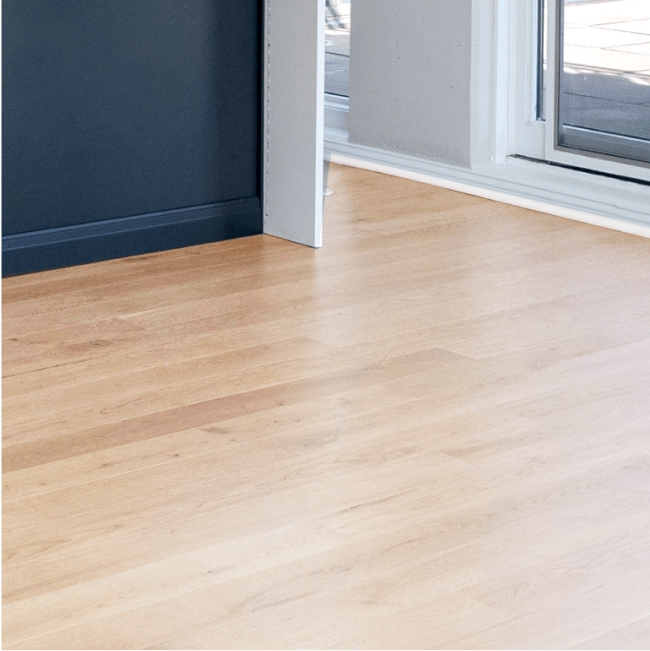
LVP’s repair path focuses on board replacement. The feasibility depends on the click profile and whether the damaged boards sit along an edge. Cutting out a plank mid-field is possible, but it takes precision and product-specific know-how. Keep a few spare cartons from your original batch if you can. Dye lots change, and finding a match years later can be difficult.
Budget Planning With Real Numbers
When we help homeowners create a project budget, we often use a per-room comparison. For a 300 square foot living room, mid-grade LVP material might total 1,200 dollars, with 750 dollars for installation and 150 dollars for trim and underlayment, landing near 2,100 dollars. An engineered hardwood of mid-range quality could be 1,800 dollars for material, 1,050 dollars for floating installation or 1,350 dollars for glue-down, and 200 dollars for sundries, landing around 3,050 to 3,350 dollars. Solid hardwood installed and site-finished can reach 3,600 to 4,800 dollars or more, depending on species and finish choices. These are typical figures, not promises, but they illustrate how the gap narrows or widens with method and grade. When wrapped into larger scopes like Whole House Painting: How to Plan Your Project or Kitchen Cabinet Painting vs. Replacement: What’s Right for You?, choosing LVP in secondary areas can free budget for cabinetry or lighting that moves the needle more on daily enjoyment.
Revive 360 Renovations Field Lessons on Durability
After thousands of square feet installed and refinished, a few truths stick. First, proper floor prep matters more than the brand you pick. We have rescued more projects with better leveling and moisture management than with a different label on the box. Second, lifestyle dictates outcome. A no-shoes household with mats at entries essentially doubles the service life of any floor. Third, shine hides nothing. Matte and low-sheen finishes look modern, reduce visible scratches, and age gracefully in both LVP and hardwood.
Revive 360 Renovations also tracks how products age in the wild. Some early LVP lines yellowed in intense sun or showed shrinkage at seams near floor-to-ceiling windows. Modern UV inhibitors have improved, but we still test samples in sun patches for a week in bright rooms. With hardwood, we plan for area rug patina. Floors under rugs age differently, which creates contrast when you move rugs. Using water-based finishes and lightly pigmented stains can minimize the differential.
How to Make the Choice
A short decision framework helps when you feel stuck.
- Define zones by moisture risk. Place LVP anywhere water can linger and you do not want to worry. Place hardwood where aesthetics and long-term renewability matter most. Set a budget with honest contingencies. Reserve 10 to 15 percent for subfloor prep and transitions. Surprises are common when old floors come up. Touch and walk samples. Your feet and ears will tell you more than spec sheets. Visit a job in progress if possible. Plan the sequence. If you are also painting, consider Interior Painting Tips: How to Choose the Perfect Color Palette and how wall color pairs with floor undertones. Do floors before final coats to avoid scuffs on fresh paint, or plan proper protection.
The Bottom Line for Cost and Durability
If your top priority is moisture resistance, easier installation, and lower upfront cost, LVP is a strong choice. Expect 15 to 20 years of good service with sensible care, and accept that replacement, not refinishing, is the end-of-life path. If your top priority is long-term value, tactile warmth, and the ability to renew the surface, hardwood is worth the investment. Expect decades of service with routine maintenance and occasional refinishing. Where budgets and lifestyles intersect, mixing the two can deliver the best of both worlds.
Flooring does not live in isolation. It touches cabinets, countertops, paint, and lighting. When we plan a kitchen, for example, we consider How to Choose the Perfect Kitchen Countertop Material for Your Home alongside flooring durability at high-use zones like the sink and range. In bathrooms, we pair The Best Bathroom Flooring Options for Moisture and Durability with tile choices and ventilation strategies, knowing that moisture management extends the life of every finish in the room.
If you take nothing else from this comparison, remember that both LVP and hardwood can be excellent. The better floor is the one that fits your rooms, your habits, and your long-term plans. Invest in prep, select quality within your budget tier, and give the floor the simple care it needs. The rest follows.